
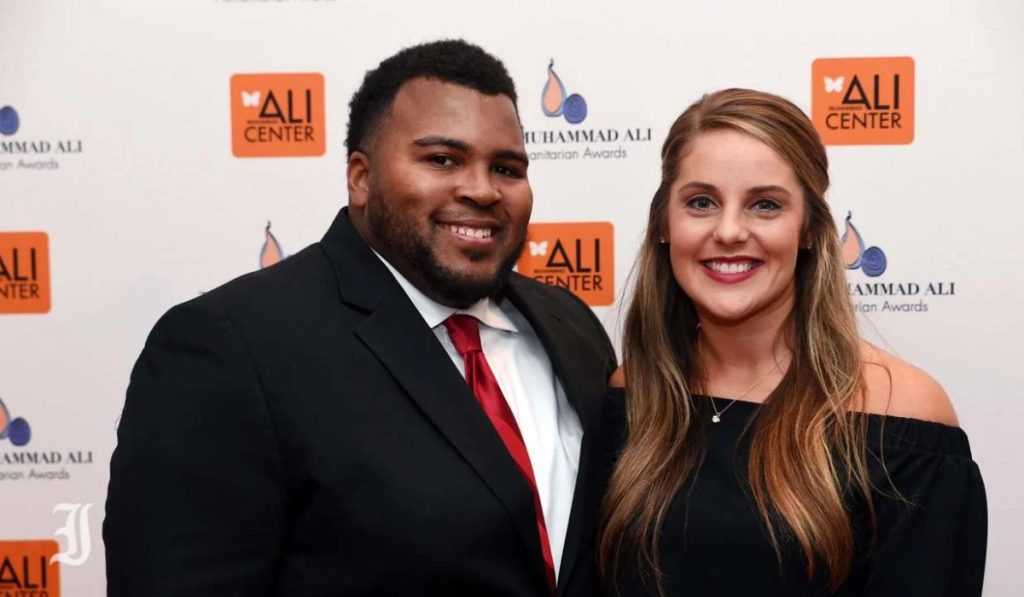
There are plenty of people who carry famous last names without really earning their place in the public conversation. Asaad Amin is not one of them. Known to many simply as the youngest adopted son of boxing legend Muhammad Ali, Asaad — also referred to as Asaad Ali or Asaad Amin Ali — has quietly carved out a meaningful career in baseball, coaching, and sports media, all while keeping a deliberate distance from the spotlight his family name could easily bring him.
If you have been searching for who Asaad Amin really is, what he does, and how he has built his life beyond the shadow of one of the greatest athletes in history, this article covers it all — from his early childhood and college baseball days to his career, marriage, and where he stands today in 2026.
Early Life: How Asaad Amin Became Part of the Ali Family
Asaad Amin was born on January 17, 1995, in Louisville, Kentucky. His entry into the Ali family is one of those stories that feels almost destined. When Asaad was just five months old, Muhammad Ali and his wife Lonnie Williams Ali visited Lonnie’s sister in Louisville. The baby boy was on the verge of entering the foster care system — his mother, a friend of Lonnie’s sister, was unable to care for him. The moment Muhammad and Lonnie saw the child, according to multiple accounts, they felt an immediate connection. Without hesitation, they chose to adopt him and give him a home full of love and stability.
Growing up as Muhammad Ali’s son could have easily been overwhelming. But his parents made a conscious choice to raise him with normalcy and groundedness. The family eventually moved to a quiet farm in Michigan, away from cameras and public attention, where Asaad spent much of his childhood enjoying the kind of simple, peaceful life most kids in famous families rarely get. That environment, by most accounts, shaped the humble, steady personality he carries to this day.
Asaad grew up alongside nine siblings — including Laila Ali, Maryum Ali, Rasheda Ali, and Muhammad Ali Jr., among others — each charting their own different paths in life. Interestingly, because Muhammad Ali had already retired from boxing before Asaad was born, Asaad never witnessed his father compete in the ring. What he knew of his father was the man at home: warm, funny, deeply principled, and endlessly supportive.
Education and the Path to Baseball
Asaad showed an early love for sports. During his school years, he tried his hand at football, basketball, and baseball — but it was baseball that truly captured him. There is something about the strategy, the teamwork, and the patience the sport demands that felt like a natural fit for his personality.
After high school, he enrolled at the University of Louisville in 2009 as a communication major and joined the Cardinals baseball team, playing as a catcher. The catcher position is one of the most mentally demanding on the field — it requires sharp focus, clear communication, and the ability to read the game from behind the plate. Asaad thrived in it.
His college journey was not a straight line. In 2011, he left the university temporarily when an opportunity came up to work with the Chicago White Sox. That decision speaks volumes about his character — he was chasing his passion, not a diploma for its own sake. After spending time in Major League Baseball and working in college coaching, he returned to the University of Louisville to finish what he had started. He graduated on May 11, 2019, earning his bachelor’s degree from the College of Arts and Sciences. As he put it himself at the time: “I always knew I was going to end up back here… this is home for me.”
Career: Building an Identity in Baseball and Sports Media
From Player to Coach
Asaad Amin’s professional journey in baseball reflects both his love for the game and his desire to give back to it. After his time as a player, he transitioned into coaching — working as an assistant baseball coach and recruiting coordinator at the college level. His calm, patient approach made him a natural mentor for young athletes. Rather than using his famous name as a calling card, he let his knowledge and genuine investment in his players’ growth do the talking.
He also served as an area scout for the Chicago White Sox, where he helped identify promising young talent that could eventually make an impact at the professional level. That kind of work requires a sharp eye, deep game knowledge, and the ability to see potential before it fully blooms — skills Asaad had developed over years of playing and coaching.
Multimedia Content Producer at UofL
One of the more interesting chapters in Asaad Amin’s career is his role as a multimedia content producer for the University of Louisville Athletics department. In this position, he helps tell the stories of student athletes, sports programs, and games through video, interviews, and digital media. It is a behind-the-scenes role, but one that carries real importance — helping young athletes get the visibility and recognition their hard work deserves. For Asaad, it is a way of staying deeply connected to the institution and the city that shaped him.
The Bond with Muhammad Ali: A Father’s Lasting Influence
For anyone curious about what kind of father Muhammad Ali was at home, Asaad’s words offer one of the clearest windows. After Ali passed away on June 3, 2016, following years of battling Parkinson’s disease, Asaad shared a deeply personal tribute on social media. He wrote: “Forever grateful for everything you have ever gave me. You’ve shown me how to love the world in ways I didn’t know possible. You’ve shown me how to be brave and courageous in situations beyond my belief! You‘ve taught me so much the last 25 years, things that will forever be imprinted in my soul.”
Those words tell you something important about Asaad Amin. His father did not push him toward boxing. He did not use his platform to shape his son’s career. He came to baseball games, watched quietly, and simply cheered him on. The lessons Ali passed down were not about fame or fighting — they were about love, humility, and courage in everyday life. Those lessons, by all accounts, remain the foundation of who Asaad is today.
Personal Life: Marriage, Family, and a Quiet Life in Louisville
Love Found at the University of Louisville
Asaad met his wife, Rachael McNulty, while they were both students at the University of Louisville. By their own account, their paths crossed at a baseball stadium in the city — a fitting beginning for someone whose entire life has revolved around the sport. They stayed together through all the changes that followed: Asaad’s temporary departure from college, his professional baseball chapter, his return to finish his degree.
They married in a private ceremony in late December 2018, surrounded by close friends and family. Asaad reportedly wore a red velvet suit with a black bow tie, while Rachael wore a beautiful white bridal gown. The event was intimate and personal — very much in keeping with the kind of life they both prefer.
A Family Growing in Louisville
The couple welcomed their daughter, Zoey Ali, on September 5, 2020. Asaad has spoken warmly about parenthood, once describing Zoey as his “forever bodyguard” — a playful acknowledgment of the way children have a way of centering everything important in a parent’s life. In 2022, the family welcomed a second child, a son, completing what sounds like a deeply happy household.
Today, in 2026, Asaad and Rachael continue to live in Louisville, Kentucky — the city where both he and Muhammad Ali were born, and where Muhammad Ali’s legacy is most deeply felt. For Asaad, staying there is not just a practical choice. It is a way of remaining connected to his roots, to his father’s memory, and to the community that raised him.
What Asaad Amin’s Story Teaches Us
It would be easy to reduce Asaad Amin’s story to a single sentence: “Muhammad Ali’s adopted son.” But that misses the point almost entirely. What makes his journey genuinely interesting is the deliberate choice he made, again and again, to be himself — not a celebrity, not a boxing heir, not a public figure chasing recognition.
He chose baseball. He chose coaching. He chose a quiet marriage and a private family life. He went back to finish his college degree years after most people would have given up on it. He works at a university helping student athletes tell their stories. None of that is glamorous. All of it is real.
In a world that often rewards spectacle over substance, Asaad Amin — or Asaad Ali, as he is sometimes known — is a reminder that you can honor your family’s legacy while still standing completely on your own two feet.
Frequently Asked Questions About Asaad Amin
Who is Asaad Amin?
Asaad Amin, also known as Asaad Ali or Asaad Amin Ali, is an American baseball coach, area scout, and multimedia content producer. He is best known as the youngest adopted son of legendary boxer Muhammad Ali and his wife Lonnie Williams Ali.
When was Asaad Amin born?
Asaad Amin was born on January 17, 1995, in Louisville, Kentucky, USA. As of 2026, he is 31 years old.
What does Asaad Amin do for a living?
Asaad works as a baseball coach, a recruiting coordinator, an area scout for the Chicago White Sox, and a multimedia content producer for the University of Louisville Athletics department.
Is Asaad Amin married?
Yes. Asaad Amin is married to Rachael Ali (née McNulty), a teacher he met at the University of Louisville. They married in December 2018 and have two children together — a daughter named Zoey Ali (born 2020) and a son (born 2022).
What is Asaad Amin’s net worth?
As of 2022, Asaad Amin’s net worth is estimated at approximately $7 million. His wealth comes from his career in baseball, coaching, scouting, and sports media work.
Final Thoughts
Asaad Amin’s life is a quietly compelling story about identity, choice, and the courage it takes to define yourself on your own terms. He grew up in one of the most famous families on earth, and he responded not by seeking the spotlight but by getting to work — on the baseball field, in the coaching box, in a university media office.
If you want to follow his journey or learn more about the Ali family legacy, checking out the University of Louisville Athletics page or searching for his profile across sports media platforms is a great place to start. His story is worth knowing — not because of who his father was, but because of who he has chosen to be.