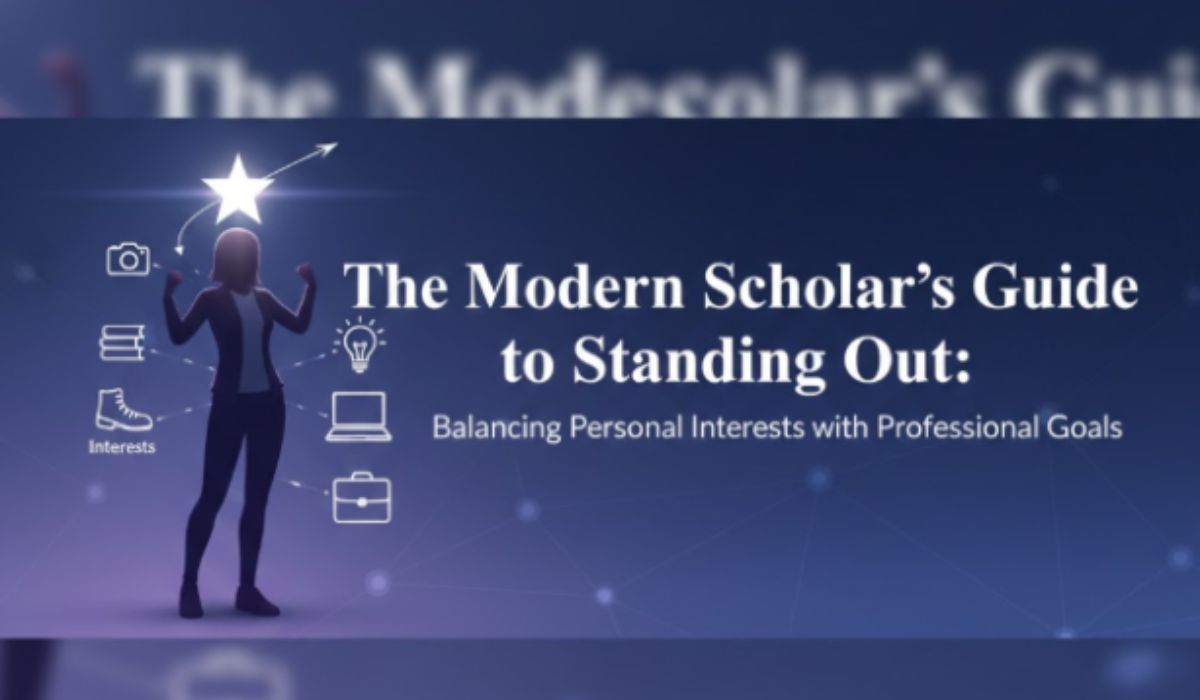
The transition from a full-time student to a recognized professional is perhaps the most significant “lifestyle” shift you will ever navigate. For many undergraduates, the pressure to “stand out” feels like a weight that competes with the desire to actually enjoy their youth. We are told to study hard, but we are also told to network, build a brand, and maintain a social life. This balancing act is the hallmark of the modern scholar. Standing out in 2026 isn’t just about having the highest GPA; it’s about how you integrate your personal passions with your long-term career vision to create a unique, authentic identity.
Success in the modern era is less about “grinding” and more about strategic positioning. Employers and universities are no longer just looking for academic machines; they are looking for humans with diverse interests, high emotional intelligence, and a clear sense of direction. When you spend your weekends hiking, volunteering, or learning a niche hobby like digital illustration, you aren’t “wasting time.” You are building the “lifestyle” of a well-rounded individual. The key is learning how to translate these personal experiences into professional language that resonates with recruiters.
The first step in this translation process is your digital and physical introduction. Many students struggle to summarize their complex lives into a single sentence on a profile or application. This is where your professional branding begins. If you are struggling to define your “vibe” to a potential employer, looking at high-quality resume headlines examples can provide the structural inspiration you need to condense your student lifestyle and skills into a punchy, high-impact statement. This isn’t just about a job search; it’s about defining who you are in the professional ecosystem before you even walk into the room.
The Evolution of the “Student Lifestyle”
In previous decades, the student lifestyle was a linear path: go to class, graduate, and find a job. Today, it is a multi-dimensional journey. Students are now influencers, entrepreneurs, and activists simultaneously. This shift requires a new set of “soft skills” that aren’t always taught in a lecture hall.
- Time Management vs. Energy Management: It’s not about how many hours you have, but how you use your peak energy levels.
- Curated Networking: Moving away from “collecting” LinkedIn connections to building genuine relationships based on shared interests.
- Personal Projects: Using your lifestyle hobbies (like photography or coding) to build a portfolio that proves your initiative.
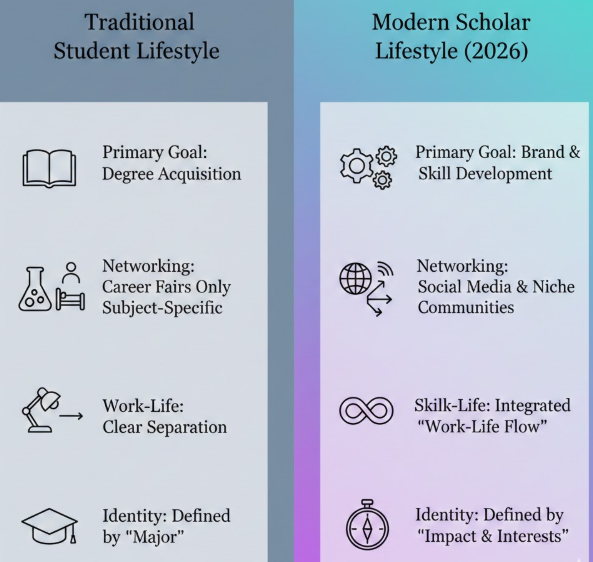
Comparing the Old vs. New Academic Lifestyle
| Aspect | Traditional Student Lifestyle | Modern Scholar Lifestyle (2026) |
| Primary Goal | Degree Acquisition | Brand & Skill Development |
| Networking | Career Fairs only | Social Media & Niche Communities |
| Skillset | Subject-specific | Interdisciplinary & Adaptive |
| Work-Life | Clear separation | Integrated “Work-Life Flow” |
| Identity | Defined by “Major” | Defined by “Impact & Interests” |
Finding Your “North Star” in a Sea of Distractions
With the rise of the “hustle culture,” many students feel they must say yes to every internship and every club. However, a high-ranking lifestyle is one characterized by essentialism. By focusing on a few key areas—your “North Star”—you prevent burnout and actually gain more ground. If your interest is environmental science, your lifestyle should reflect that: perhaps you shop at zero-waste stores, volunteer for local cleanups, and follow industry leaders. This consistency makes you a “specialist” in the eyes of others.
The hardest part of this journey is often the “Gatekeeper Phase”—those moments where you have to prove your worth on paper, such as applying for a competitive scholarship or a prestigious Master’s program. When the stakes are this high, your story needs to be flawless. For many, the pressure of Myassignmenthelp personal statement writing services becomes a valuable resource to ensure their unique life story is told with the professional polish it deserves. These services aren’t about replacing your voice; they are about amplifying it so that your personal interests and professional goals align perfectly in the eyes of an admissions committee.
Integrating your personal “why” into your professional “how” is the secret sauce to ranking high in your field. Whether you are writing an essay or a cover letter, the goal is to show that your lifestyle choices have prepared you for the challenges of the professional world.
Practical Tips for the Modern Undergraduate
To truly stand out, you need to treat your life like a laboratory. Experiment with different routines, tools, and communities. Here are three actionable habits to start today:
- The “Sunday Reset”: Spend one hour every Sunday auditing your week. Did your activities align with your professional goals? If not, adjust.
- Learn in Public: Don’t just study in private. Share what you learn on a blog or social media. This builds an “organic” backlink to your personal brand.
- Cross-Pollinate: Use your personal interests to solve academic problems. If you love gaming, write your economics paper on the “in-game economy.” This makes the work easier and the results more interesting.
The Role of Peer Support and Mentorship
No one reaches the top of the Google search results—or the top of their career—alone. The modern scholar knows when to ask for help. This might mean finding a mentor in your desired field or using academic tools to manage a heavy workload. Surrounding yourself with high-achievers who value both “life” and “work” will naturally rub off on you. Your environment is a reflection of your future; choose it wisely.
As we move further into 2026, the boundaries between our personal and professional lives will continue to blur. This is an opportunity, not a threat. By being intentional with your branding, seeking expert help when the narrative gets complex, and staying true to your personal passions, you don’t just “find” a career—you design a lifestyle.
Final Thoughts for the Student Journey
Standing out is a marathon, not a sprint. The most successful students are those who realize that their “Resume” is a living document, fueled by their daily habits and their willingness to learn. Don’t be afraid to be a “niche” individual. In a world of generic applicants, the person who has a clear lifestyle “brand” and the professional tools to back it up will always rank first.
About The Author
I’m Ruby Walker, an education consultant and career strategist at MyAssignmentHelp, where I specialize in helping undergraduate students bridge the gap between academic theory and professional reality. With over seven years of experience in student lifestyle coaching and recruitment trends, my mission is to empower the next generation of scholars to own their unique narratives.